Studio Notes Podcast - Tinotenda Mushore
The fourth episode of the Studio Notes podcast is now available. Studio Notes: Conversations is a podcast shaped by curiosity. Each episode is a one-to-one conversation with someone whose work or way of seeing the world holds my attention. The guests come from different fields: art, music, neuroscience, architecture, design. The format is simple. Two people, one conversation, no script. I listen more than I lead. Some episodes are in English, others in Dutch. Every conversation comes with written summaries in both languages.
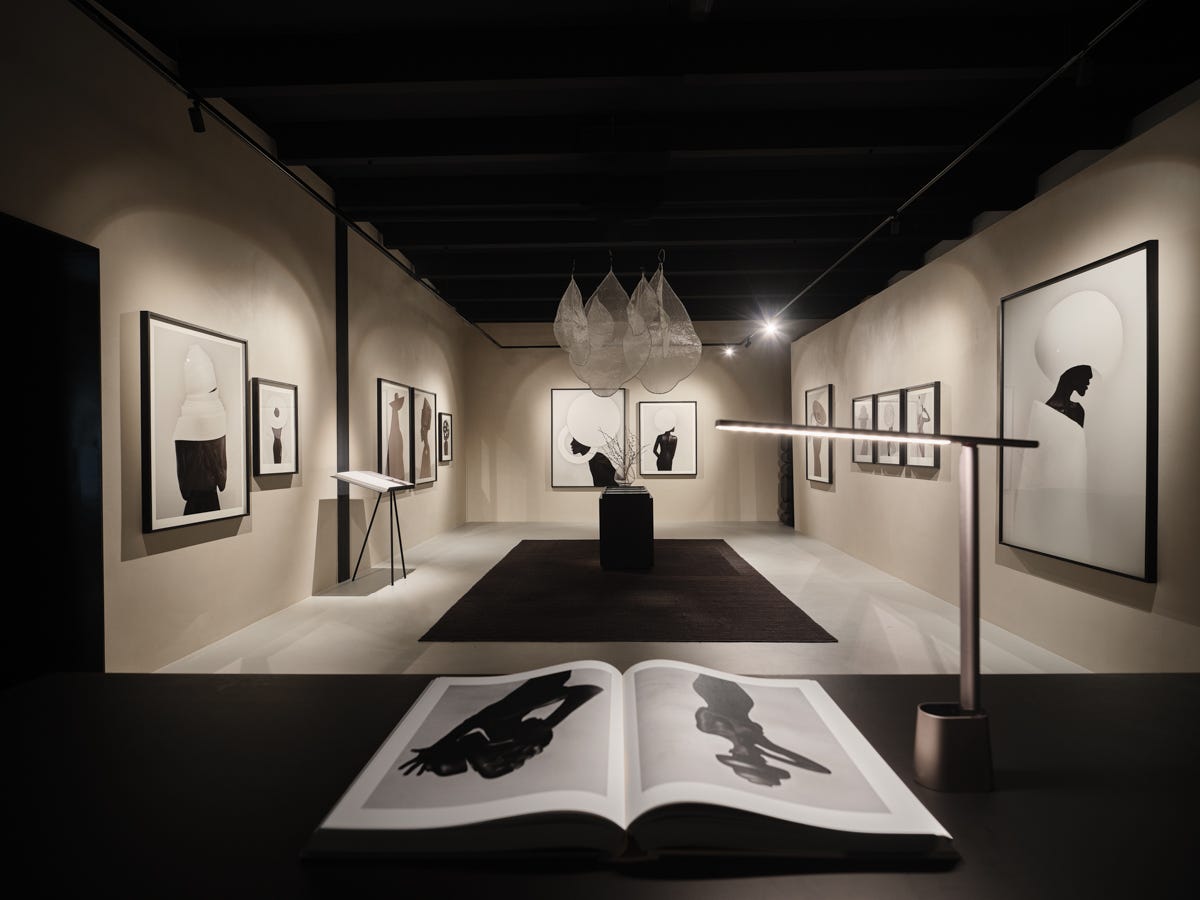
This time, I sit down with Tinotenda Mushore, my muse and a central presence in my work for over ten years. We recorded the conversation on 13 October 2026 in the gallery space of my studio in Alkmaar, surrounded by the fifteen works of Tino 10 Years, a few weeks before the exhibition opened. The last time we sat down for a conversation like this was in 2020, and a lot has happened since then: a book, several exhibitions, a work in the permanent collection of the Getty Museum, and a shoot with Maison Michel this year. I had prepared fifteen questions that I had wanted to ask her for a long time, and Tino answered them openly and often with a laugh.
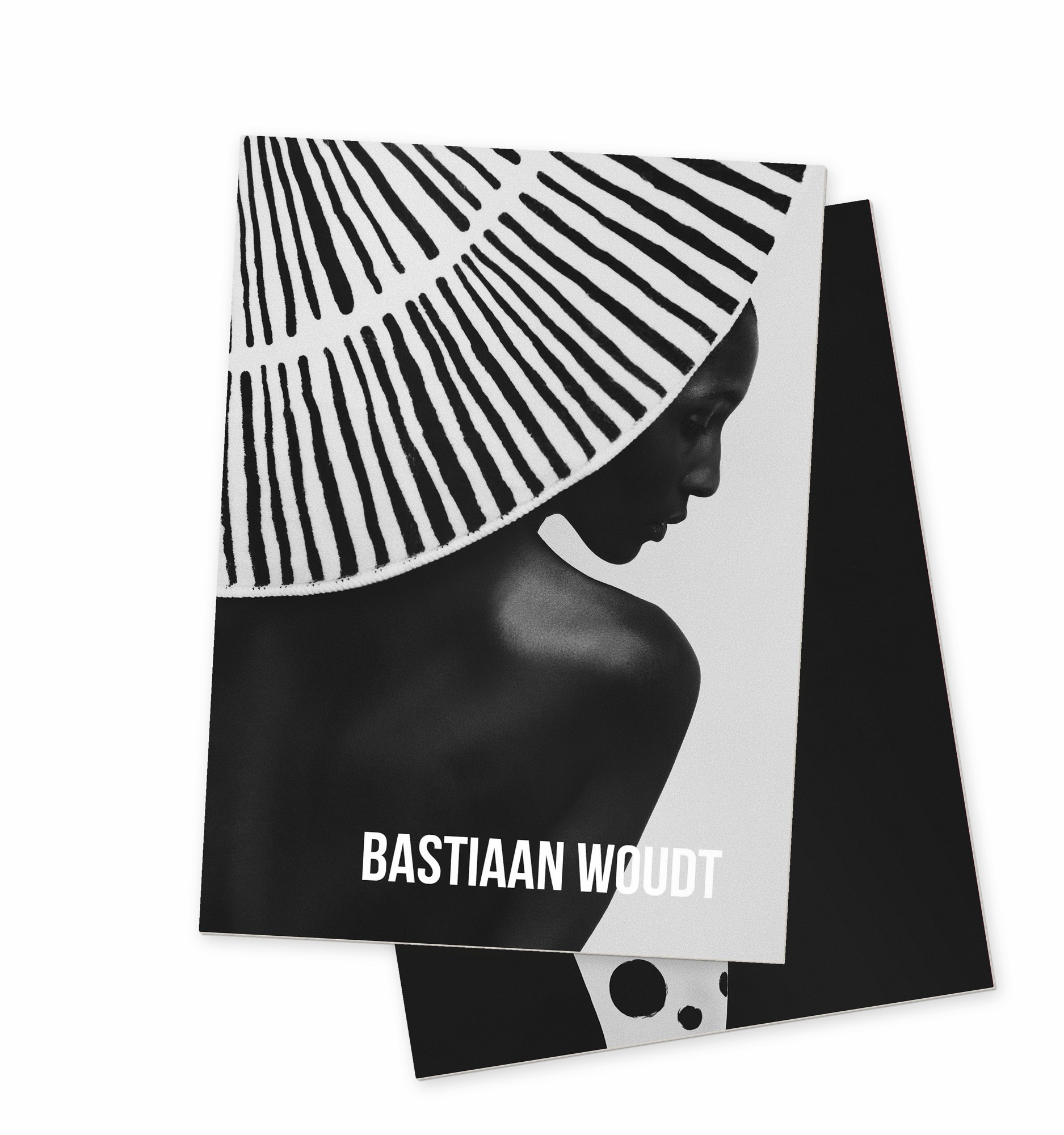
The exhibition also now has a catalogue, which I designed myself. Tino 10 Years | Catalogue brings together the fifteen photographs in the exhibition across 48 pages, in a softcover measuring 16.5 by 22.5 cm. I created it so that visitors to the gallery would have something to take home. There are 500 copies in total, 150 of which are available online for €20 through 1605 Collective.
In this episode, we discuss:
The Facebook post without requirements that brought us together, and why she replied when agencies kept telling her she was too short
Why she felt safe on that first shoot, even though we had never met
The moment I told her that everything would be black and white, after she had hoped to see her skin in colour
Why my work requires her to hold a pose for longer than she does for anyone else
Her mother and grandmother, who were both models, and what she learned from watching them
Recognising herself in images where her face is not visible
The one image that sums up our ten years: Athena for her, Cycle II and Rhythm for me
The accidents on set that became works of art
What her family thinks of the work
What she would tell herself on that very first day
Listen now on Substack, YouTube, Apple Podcasts or Spotify.
Tino 10 Years is on display at Studio Woudt, Hazenkoog 9, Alkmaar, until 31 March 2027. You can find out more about the exhibition on its exhibition page, and the days on which you can visit are listed at studiowoudt.com/events.
Summary (English)
Tino found me through a post on Facebook. I was looking for models, stylists and make-up artists to make the work that was in my head, after years of commercial portraits. There were no requirements in that post, no height, no measurements. Tino was around twenty-five and frustrated with an industry that kept putting her in a box. Agencies told her she was too short, and she was sure the colour of her skin played a part as well. So she decided to stop waiting and to choose her own shoots, with people whose work she felt something for. She paints herself and has always loved art and history, and she told me that when she saw my work, it looked like art to her.
That first post asked for nude models. Tino had never done that before and she was scared, but the tone of our conversations and of the work made her feel safe, even though we had never met. In the end we shot no nudes at all. What she remembers is a warm welcome, a team of mostly women, and that I kept asking if she was comfortable. I remember that it was one of the first times I knew on set that I had an image, instead of finding it later in the edit. At the end of that day I told her everything would be black and white. She froze, because she could not understand why anyone would photograph her skin in black and white. She said nothing and let it go, which she says is not like her at all. I explained to her what I still believe: my camera shoots colour, but I look at lines and textures, and colour distracts me from that. She said that is exactly why she felt at ease on set: she could tell I was looking at lines.
We talked a lot about how we work. Most of the images are static, and that means holding a pose for a long time, which goes against her nature, because Tino has a lot of energy. Often she walks onto the set and is already standing in the pose I had in mind before I say a word. She calls my work regal: it asks for poise and for knowing her own body, and too much movement takes that away. She learned that from watching her mother, who raised her alone and took her along to sets and voice-overs. Her mother was a model, and so was her grandmother, who is ninety-one now.
In many of the works her face is not visible. She still recognises herself, by her skin and by the line of her back. Before we started working together, she told me, she did not know she had a beautiful back. For her, a model is a blank canvas, there to serve the image. In ten years she has never asked me to leave a picture out of a show. When I asked her which image sums up our ten years, she chose Athena. I named two: Cycle II, which is now in the permanent collection of the Getty Museum in Los Angeles, and Rhythm. Both come from the same shoot in 2020, the first in which we used the circles and geometric shapes that have been part of how we work ever since. Looking around the room, I see the evolution from the early work, which was about skin and hair, to the later work, where she and the shapes became one. Some of the works were gifts: a fabric on her head that unravelled and fell perfectly over her body, a shape that slipped from her head as she reached for it.
She also told me what the people close to her think. Her parents are her biggest fans, and her brother tells his friends about the work. Her cousin’s wife managed to get a copy of the book Tino before it sold out in three days.
I told her she has not changed at all in ten years, and she thanked her mother and grandmother for that. Almost everything we made in ten years was shot in this one building, and we agreed that we should keep experimenting. My last question was what she would tell herself on that very first day. She said she would not change anything. She would tell herself to hold on, because it was going to be an amazing ride.
Samenvatting (Nederlands)
Tino vond mij via een oproep op Facebook. Na jaren van zakelijke portretten zocht ik modellen, stylisten en visagisten om het werk te maken dat in mijn hoofd zat. In die oproep stonden geen eisen, geen lengte, geen maten. Tino was een jaar of vijfentwintig en gefrustreerd over een branche die haar steeds in een hokje stopte. Bureaus vonden haar te klein, en ze wist zeker dat haar huidskleur ook meespeelde. Dus besloot ze niet langer te wachten en zelf haar shoots te kiezen, met mensen bij wie ze iets voelde. Ze schildert zelf en houdt van kunst en geschiedenis, en ze vertelde dat mijn werk voor haar meteen als kunst voelde.
Die eerste oproep vroeg om naaktmodellen. Dat had Tino nog nooit gedaan en ze vond het spannend, maar door de toon van onze gesprekken en van het werk voelde ze zich veilig, terwijl we elkaar nooit hadden ontmoet. Uiteindelijk hebben we helemaal geen naakt geschoten. Wat zij zich herinnert is een warm welkom, een team van vooral vrouwen, en dat ik steeds vroeg of ze zich op haar gemak voelde. Ik herinner me dat het een van de eerste keren was dat ik op de set al wist dat ik een beeld had, in plaats van het later in de selectie te vinden. Aan het eind van die dag vertelde ik haar dat alles zwart-wit zou worden. Ze bevroor, want ze begreep niet waarom iemand haar huid in zwart-wit zou willen fotograferen. Ze zei niets en liet het gaan, en dat is volgens haarzelf helemaal niets voor haar. Ik legde haar uit wat ik nog steeds vind: mijn camera fotografeert in kleur, maar ik kijk naar lijnen en texturen, en kleur leidt me daarvan af. Zij zei dat ze zich juist daardoor op haar gemak voelde op de set: ze zag dat ik naar lijnen keek.
We hadden het veel over hoe we werken. De meeste beelden zijn statisch, en dat betekent een pose lang vasthouden. Dat gaat tegen haar natuur in, want Tino heeft enorm veel energie. Vaak loopt ze de set op en staat ze al in de pose die ik in gedachten had, nog voor ik iets zeg. Ze noemt mijn werk regal: het vraagt om houding en om je eigen lichaam kennen, en te veel beweging haalt dat weg. Dat leerde ze door naar haar moeder te kijken, die haar alleen opvoedde en haar meenam naar sets en voice-opnames. Haar moeder was model, en haar grootmoeder ook. Die is nu eenennegentig.
Op veel van de werken is haar gezicht niet te zien. Toch herkent ze zichzelf, aan haar huid en aan de lijn van haar rug. Voordat we samenwerkten, vertelde ze, wist ze niet dat ze een mooie rug had. Voor haar is een model een leeg canvas, dat het beeld dient. In tien jaar heeft ze me nooit gevraagd een foto uit een tentoonstelling te laten. Toen ik vroeg welk beeld onze tien jaar samenvat, koos zij Athena. Ik noemde er twee: Cycle II, dat nu in de vaste collectie van het Getty Museum in Los Angeles zit, en Rhythm. Ze komen allebei uit dezelfde shoot in 2020, de eerste waarin we de cirkels en geometrische vormen gebruikten die sindsdien bij onze manier van werken horen. Als ik rondkijk in de ruimte, zie ik de ontwikkeling van het vroege werk, dat over huid en haar ging, naar het latere werk, waarin zij en de vormen één werden. Sommige werken waren een geschenk: een stof op haar hoofd die losraakte en precies over haar lichaam viel, een vorm die van haar hoofd gleed terwijl ze ernaar greep.
Ze vertelde ook wat de mensen om haar heen ervan vinden. Haar ouders zijn haar grootste fans, en haar broer vertelt zijn vrienden over het werk. De vrouw van haar neef wist een exemplaar van het boek Tino te bemachtigen voordat het in drie dagen was uitverkocht.
Ik zei dat ze in tien jaar helemaal niet veranderd is, en ze bedankte haar moeder en grootmoeder daarvoor. Bijna alles wat we in tien jaar maakten is in dit ene gebouw geschoten, en we spraken af dat we moeten blijven experimenteren. Mijn laatste vraag was wat ze zichzelf zou zeggen op die allereerste dag. Ze zou niets veranderen, zei ze. Ze zou zichzelf vertellen dat ze zich moest vasthouden, want het zou een geweldige reis worden.
Thank you for listening.
— Bastiaan
Comments and likes live on Substack.